
🔍 Quick Answer: Under eye filler uses hyaluronic acid (HA) to restore volume to the tear trough — the groove beneath the eye that creates shadowing and a tired appearance. Results are immediate, last around 9–18 months, and can be reversed if needed. It works best for hollowing caused by volume loss, not for puffiness or pigmentation. Because the skin here is the thinnest on the face, it’s one of the treatments where the doctor’s experience matters most.
Why Does the Under Eye Area Look Tired?
Most people assume dark circles under the eyes come from not sleeping enough. Sometimes that’s true — but more often, what we’re seeing is a shadow created by a hollow groove called the tear trough, which deepens as we lose volume in the mid-face over time.
As we age, the fat pads that support the area beneath the eye gradually shift and deflate. This creates a depression that catches light differently from the rest of the face, casting a shadow that reads as darkness or fatigue — even in someone who’s perfectly well-rested.
That’s where under eye filler comes in.
What Is Under Eye Filler?
Under eye filler is a non-surgical treatment that places a small amount of hyaluronic acid gel into the tear trough to restore the volume that’s been lost. By softening the groove, it reduces the shadow it creates and creates a smoother, more natural transition between the lower eyelid and the cheek.
The amount used is small — typically 0.2 to 0.5ml per side — and the results are immediate. It’s one of the most requested treatments in aesthetic medicine, but also one of the most technically demanding. The skin beneath the eye is the thinnest on the face, sits over blood vessels and muscle, and moves constantly. A good result comes down almost entirely to the experience and judgment of the doctor doing it.
Is Filler the Right Answer for You?
Not every under eye concern responds to filler — and understanding the difference can save you from a result you’re not happy with.
If your concern is hollowing or a groove beneath the eye — this is what filler is designed for, and it works well. The hollow creates a shadow; fill the hollow, and the shadow softens.
If your concern is puffiness or bags — this is caused by fat pushing forward beneath the eye, not by a lack of volume. Adding more volume with filler can actually make puffiness look worse. This type of concern is better addressed surgically.
If your concern is dark pigmentation — filler won’t change the colour of the skin. It can help if the darkness is caused by shadowing from a hollow, but not if it’s caused by pigment or visible blood vessels.
When in doubt, a consultation with an experienced doctor will quickly identify which situation you’re in.
What the Treatment Involves

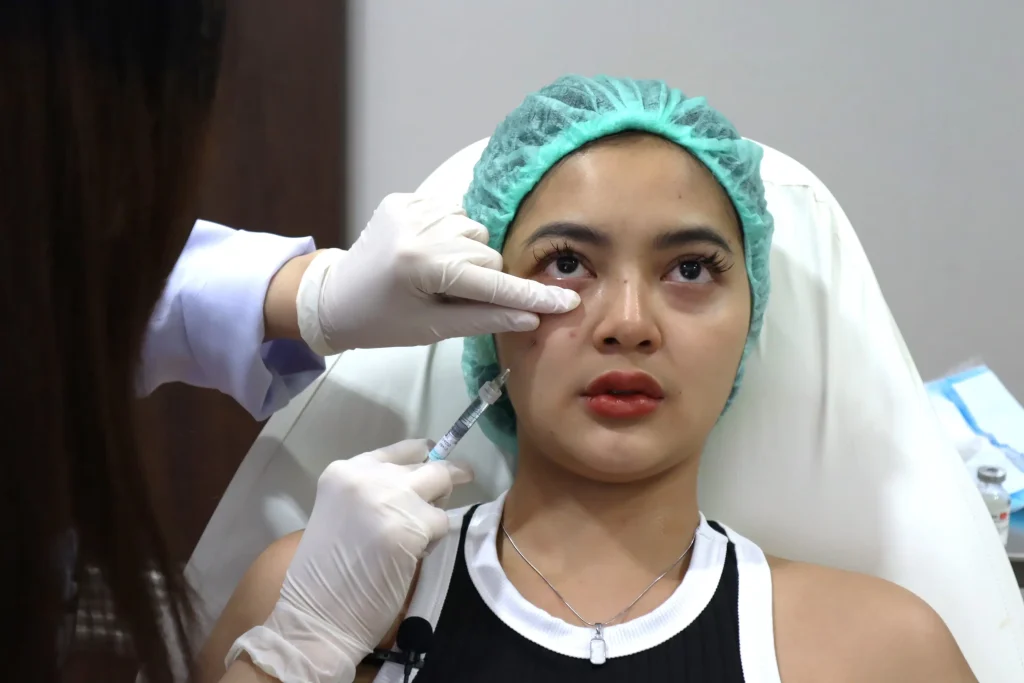
The doctor will apply numbing cream to the area before starting, so discomfort is minimal. Most people describe the sensation as mild pressure rather than pain.
A small amount of filler is placed carefully beneath the skin using either a fine needle or a blunt-tipped cannula — the choice depends on the doctor’s assessment of your anatomy and what will give the safest, most precise result. The whole process usually takes around 20–30 minutes.
Results are visible immediately, though some swelling in the first few days is normal as the hyaluronic acid attracts moisture. Most people look and feel ready to return to normal activities the same day or the next.
How Long Does It Last?


Under eye filler typically lasts between 9 and 18 months. Because this area of the face moves less than areas like the lips, the filler tends to stay put longer than in other locations. How long it lasts also depends on the product used and how quickly your body breaks it down naturally.
One of the advantages of hyaluronic acid filler is that it’s reversible. If you’re unhappy with the result — or if any complication arises — an enzyme called hyaluronidase can dissolve it quickly and safely.
What Are the Risks?
Under eye filler is generally safe when performed by an experienced doctor, but it’s worth going in with realistic expectations about what the recovery period looks like.
Bruising and swelling are the most common side effects. Some bruising is quite common in this area given the number of small blood vessels nearby. It usually settles within a few days to a week.
The Tyndall effect is a bluish discolouration that can appear if filler is placed too close to the surface of the skin. It’s correctable with hyaluronidase.
Lumps or unevenness can sometimes occur, and are usually manageable with gentle massage or hyaluronidase if needed.
Vascular complications are rare but serious. If filler enters a blood vessel, it can affect blood flow to surrounding tissue. This is why it’s so important to have this treatment done by a doctor who is both experienced and prepared to manage complications if they arise.
The under eye area has more potential for complications than almost any other filler location on the face. This isn’t a reason to avoid the treatment — it’s a reason to be selective about who does it.
Before and After Treatment
Before your appointment
- Avoid alcohol for 48 hours beforehand
- skip blood-thinning medications like aspirin or ibuprofen for a few days if you can.
- Let your doctor know about any supplements, medications, or previous treatments in the area.
After your appointment
- Avoid pressing or rubbing the area for a couple of days.
- Keep your head slightly elevated when sleeping on the first night if there’s swelling.
- Skip intense exercise and saunas for 24 hours.
- Most people are comfortable going back to their normal routine the next day.
Under Eye Filler vs Other Options
Sometimes filler is the right answer. Sometimes something else works better. Here’s a quick overview of how the options compare.
| Option | What it does | Best for | Recovery |
|---|---|---|---|
| Under eye filler | Restores volume to the hollow | Hollowing from volume loss | Minimal |
| Thermage Eye | Tightens skin around the eye with RF energy | Loose or crepey skin | None |
| Skin Booster | Adds hydration to the skin | Dry, dull skin under the eye | Minimal |
| Blepharoplasty | Surgical correction | Fat pad herniation, excess skin | 1–2 weeks |
FAQ
A: Numbing cream is applied before treatment, so most people find it very tolerable. The under eye area is sensitive, but the discomfort is usually brief and mild.
A: Somewhere between 9 and 18 months for most people. The area tends to hold filler well because it moves less than places like the lips.
A: Hyaluronic acid filler can be dissolved with an enzyme called hyaluronidase, usually within 24–48 hours. This is one of the reasons HA is the preferred choice for this area — you’re not committed to the result.
A: Often yes. Many people combine under eye filler with other areas like the cheeks or chin. Your doctor will advise on what makes sense to do together.
A: In the right hands, yes. Less is almost always more in this area — a small, precise amount gives a far more natural result than trying to correct everything at once. A good doctor will suggest starting conservatively and reassessing.
A: Not quite. People with significant fat pad puffiness, very thin skin, or certain medical conditions may not be good candidates. A proper assessment will give you a clear answer for your specific situation.
References
- Liu X, et al. The efficacy and safety of hyaluronic acid injection in tear trough deformity: A systematic review and meta-analysis. Aesthetic Plastic Surgery. 2024. Read study
- Puyana C, Montes JR. Long-term effects of tear trough hyaluronic acid filler. Journal of Clinical and Aesthetic Dermatology. 2025. Read study
- Torabi SJ, et al. Are tear trough fillers really that bad? Facial Plastic Surgery & Aesthetic Medicine. 2025. Read study
- Spada J, et al. Needle versus cannula to treat tear trough. Plastic and Reconstructive Surgery Global Open. 2023. Read study