
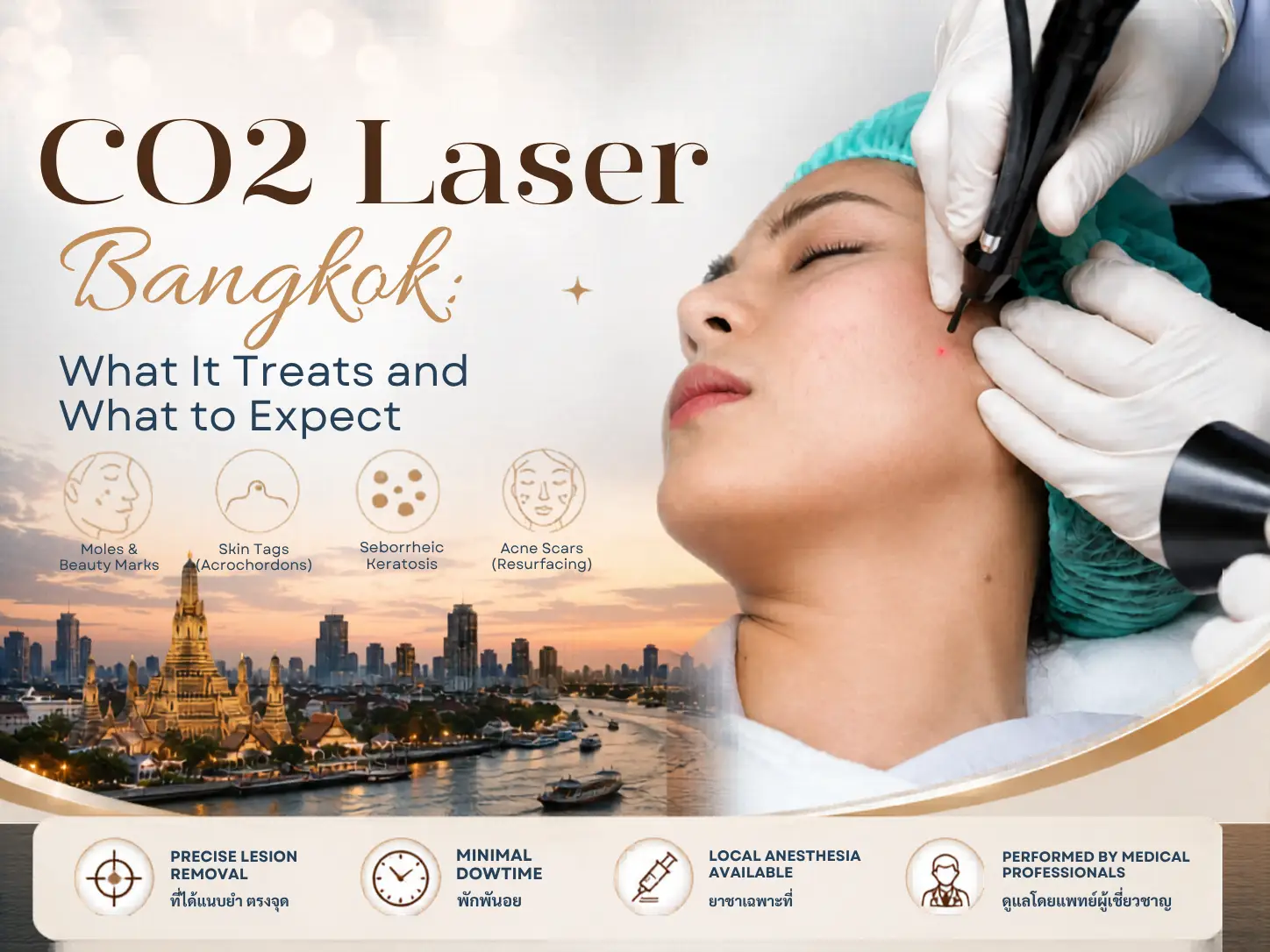
🔍 Quick Answer: CO2 Laser Bangkok : CO2 laser is one of the most versatile dermatological treatments available — used for skin resurfacing, acne scar reduction, skin tag and mole removal, and overall skin rejuvenation. In Bangkok, it’s widely available at medical aesthetic clinics at significantly lower prices than in Western countries, with no compromise on technology. Downtime ranges from 5–14 days depending on treatment intensity. Always choose a clinic where the procedure is performed by a licensed doctor.
CO2 Laser Bangkok: What It Treats and What to Expect
CO2 laser is one of the most clinically established laser treatments in aesthetic medicine — and Bangkok has become a popular destination for both locals and international visitors seeking it. Whether you’re dealing with acne scars, unwanted skin growths, or general skin texture concerns, CO2 laser offers a range of applications that few other treatments can match.
This guide explains what CO2 laser actually does, who it’s suitable for, and what to look for when choosing a clinic in Bangkok.
What Is CO2 Laser?
CO2 laser — short for Carbon Dioxide laser — uses a specific wavelength of infrared light (10,600 nanometers) to interact with water molecules in skin cells. Because skin tissue contains water, the laser energy is absorbed precisely, vaporising targeted cells with minimal impact on the surrounding tissue.
This precision is what makes CO2 laser so versatile. Depending on how the beam is calibrated — its depth, intensity, and pattern — the same technology can be used for delicate procedures like skin tag removal, or more intensive resurfacing treatments for scars and deep texture concerns.
CO2 laser works by ablating (vaporising) damaged skin layers, while simultaneously stimulating the deeper dermis to produce new collagen and elastin. The result is both surface renewal and structural improvement — which is why results continue developing for months after the initial healing phase.
What Can CO2 Laser Treat?
CO2 laser has one of the broadest treatment ranges of any laser technology. Common applications include:
Skin tags, moles, and benign growths — CO2 laser precisely removes small skin growths with minimal bleeding and a lower risk of scarring compared to traditional surgical excision. Most removals are completed in a single session.
Acne scars — particularly effective for atrophic (depressed) acne scars. The laser ablates the scarred surface and stimulates new collagen production, gradually improving texture and depth over several months.
Skin resurfacing — removes damaged outer skin layers to reveal fresher, smoother skin underneath. Addresses fine lines, uneven texture, enlarged pores, and dullness.
Sun damage and age spots — targets hyperpigmentation caused by UV exposure, revealing more even-toned skin beneath.
Stretch marks — CO2 laser stimulates collagen in stretch-marked areas, gradually improving their appearance over multiple sessions.
Skin tightening — the heat generated during treatment also stimulates collagen and elastin production in deeper layers, contributing to firmer skin over time.
What Results Can You Expect?
Results depend significantly on the treatment type and your individual skin condition:
Skin tag and growth removal — immediate. The growth is removed in a single session; the treated area heals within 1–2 weeks.
Acne scar improvement — gradual. Initial improvements are visible within 2–4 weeks, with continued collagen remodelling over 3–6 months. Most people with moderate scarring need 1–3 sessions, spaced 6–8 weeks apart to allow the skin to fully recover between treatments.
Skin resurfacing — visible improvement in texture and tone within 2 weeks post-healing; full results develop over 3–6 months as collagen rebuilds.
One important expectation to set: CO2 laser results continue improving after the initial healing phase. The collagen stimulation triggered by treatment keeps working for months — which means the best results are typically seen 3–6 months after the procedure, not immediately.
Downtime: What to Realistically Expect
CO2 laser requires more downtime than most other aesthetic treatments — this is one of the most important things to plan for.
Skin tag / growth removal: 5–10 days for the treated spot to crust and heal. The surrounding skin is largely unaffected.
Acne scar treatment and skin resurfacing: 7–14 days of redness, swelling, and peeling as the skin renews itself. Most people are comfortable returning to normal activities after 10–14 days.
During healing, the skin is sensitive and vulnerable. Sun protection is non-negotiable, and your doctor will provide specific aftercare instructions for each stage of recovery.
Before and After Treatment: Key Guidelines
Before:
- Avoid sun exposure and tanning for at least 2 weeks prior
- Stop retinoids and exfoliating acids as advised by your doctor
- Inform your doctor of any medications, supplements, or skin conditions
- Those with a history of cold sores may need preventive antiviral medication before treatment
After:
- Keep the treated area clean with a mild cleanser
- Apply prescribed healing ointments consistently
- Use SPF 50+ sunscreen daily and avoid direct sun
- Do not pick, scratch, or peel the skin — let it shed naturally
- Avoid swimming pools, saunas, and heavy exercise during the healing period
Is CO2 Laser Safe for Asian Skin Tones?
This is an important consideration. Darker skin tones — including many Southeast Asian complexions — carry a higher risk of post-inflammatory hyperpigmentation (PIH) with ablative laser treatments. This means the treated area may temporarily darken during healing before improving.
This doesn’t mean CO2 laser is unsafe for Asian skin — it means the treatment settings and aftercare need to be carefully calibrated for your skin type. An experienced doctor will assess your Fitzpatrick skin type, recommend the appropriate intensity, and provide a post-treatment plan that minimises PIH risk.
This is one of the key reasons why doctor selection matters significantly for CO2 laser — more so than for many other aesthetic treatments.
How Does CO2 Laser Compare to Other Options?
CO2 laser sits at the more intensive end of the laser spectrum. Compared to lighter treatments like skin boosters or superficial peels, it works at a deeper level — which means more significant results, but also more downtime and recovery involved.
For concerns like acne scars, skin resurfacing, or growth removal, CO2 laser is often the most direct and effective solution available. Your doctor will advise whether it’s the right fit for your skin concern, or whether a different treatment approach would serve you better.
Who Is a Good Candidate?
CO2 laser is well-suited for people with:
- Acne scars (atrophic/depressed type)
- Skin tags, moles, or benign skin growths they want removed
- Uneven skin texture, enlarged pores, or mild to moderate wrinkles
- Sun-damaged or dull skin requiring resurfacing
- Skin tightening goals without surgery
It may not be the right choice for those with:
- Active skin infections or inflammation
- Very dark skin tones without careful doctor assessment
- Autoimmune skin conditions
- Unrealistic expectations about downtime
A thorough consultation with a qualified doctor is essential before proceeding.
CO2 Laser at La Grace Clinic Bangkok
La Grace Clinic offers CO2 laser treatments across 8 branches in Bangkok, performed by licensed aesthetic doctors. Treatments are tailored to individual skin type, concern, and tolerance for downtime — from targeted skin tag removal to more comprehensive skin resurfacing.
All procedures include a pre-treatment skin assessment and post-treatment aftercare guidance.
📞 087 494-4000, 087 494-9000 Line: @lagraceclinic
FAQ
A: For skin tag removal, typically one session. For acne scars and resurfacing, most people need 1–3 sessions depending on severity, spaced 6–8 weeks apart. Your doctor will advise after assessing your skin.
A: A topical numbing cream is applied before treatment, making it generally well-tolerated. You may feel warmth or mild tingling during the procedure. More intensive resurfacing may require local anaesthesia.
A: Healed skin looks improved within 2–4 weeks. The full benefit — particularly for scars and resurfacing — develops over 3–6 months as collagen continues rebuilding.
A: Not during the active healing phase. Once the skin has fully healed and your doctor approves, mineral-based makeup is generally recommended first.
A: Yes — CO2 laser is one of the most effective methods for skin tag removal. It’s precise, quick, low-risk for scarring, and most growths are resolved in a single session.
Summary
CO2 laser is one of the most effective tools in aesthetic dermatology — covering everything from quick skin tag removal to comprehensive scar revision and skin resurfacing. In Bangkok, it’s accessible at internationally competitive prices, with clinics equipped with modern technology and experienced doctors. The key to a good outcome is choosing a clinic with proper medical oversight, appropriate skin assessment, and clear aftercare support.
Related Links