🔍 Quick Answer: Melasma is a common pigmentation condition that appears as brown or grey-brown patches on the face, triggered mainly by sunlight, heat, and hormones. Melasma treatment in Bangkok usually combines strict sun protection with doctor-guided options such as topical lightening agents, gentle laser treatments, and mesotherapy. Melasma can be controlled and lightened over time, but it can return, so long-term sun care is part of every plan.
What Is Melasma?
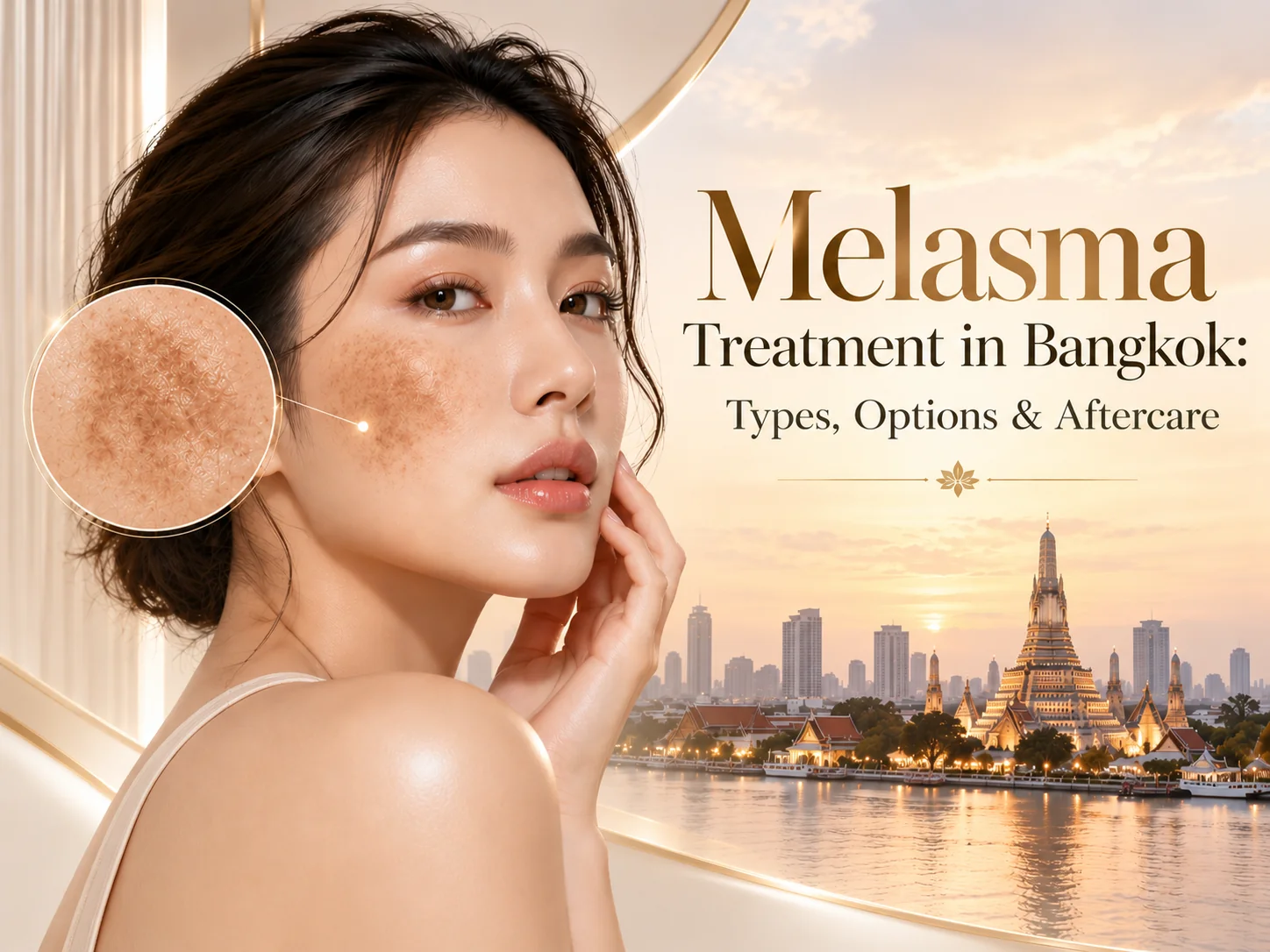
Melasma is a skin condition in which the pigment cells in your skin produce more melanin than usual in certain areas. The result is flat patches of brown, tan, or grey-brown color, most often on the cheeks, forehead, bridge of the nose, and upper lip. The patches usually appear on both sides of the face in a fairly symmetrical pattern, and their edges tend to blend gradually into the surrounding skin rather than ending in a sharp line.
Melasma is far more common in women than in men, and it often appears between the ages of 20 and 50. People with medium to darker skin tones, including many people of Asian, Middle Eastern, and Latin American background, are more likely to develop it because their pigment cells respond more strongly to triggers.
It is worth saying clearly: melasma is not dangerous to your health and is not contagious. The difficulty is that it can be persistent, it can change with the seasons, and it affects how many people feel about their skin.
Melasma vs. Freckles vs. Dark Spots
Many people use these terms interchangeably, but they behave differently, so a correct diagnosis matters before choosing a treatment.
- Melasma appears as larger, blurry-edged patches, usually on both sides of the face, and is strongly affected by sunlight, heat, and hormones.
- Freckles are small, well-defined dots scattered across sun-exposed areas, often darker in summer and lighter in cooler months.
- Sun spots (solar lentigines) are flat, well-defined brown spots caused by years of sun exposure, and they do not fade with the seasons.
- Post-inflammatory hyperpigmentation (PIH) is darkening left behind after acne, a rash, or skin irritation, and it appears where the original inflammation was.
Freckles and sun spots often respond to laser treatment relatively quickly. Melasma needs a gentler and more patient approach, which is why identifying it correctly is the first step.
Why Melasma Can Be Harder to Control in Bangkok
If you have recently moved to Bangkok or spend long periods here, you may notice your melasma darkening even if it was mild back home. There are a few reasons for this.
Strong sunlight all year round. Bangkok sits close to the equator, so the UV index is frequently very high throughout the year, not only in summer. There is no real “off season” for sun protection.
Visible light matters too. UV rays are not the only concern. The American Academy of Dermatology notes that visible light has been shown to worsen melasma, especially in people with darker skin tones, and recommends a tinted sunscreen containing iron oxide in addition to SPF.
Heat. Heat itself can stimulate pigment production. Walking outdoors at midday, cooking over a hot stove, saunas, hot yoga, or even sitting in a car parked in the sun can all add up.
Humidity and sweat. In a humid climate, sunscreen wears off faster through sweating and wiping your face, so it needs to be reapplied more often than many people expect.
Put simply, the same routine that kept melasma under control in a cooler country may not be enough in Bangkok. This is not a sign that treatment has failed, only that the environment asks more of your sun protection. It is also why melasma treatment in Bangkok works best when every procedure is paired with a stronger daily sun-care routine.
What Causes Melasma?
Melasma rarely has one single cause. In most people, several factors combine:
- Sunlight: UV and visible light are the main triggers for darkening.
- Hormones: Pregnancy, oral contraceptives, and hormone therapy can trigger or worsen melasma. When it appears during pregnancy, it is sometimes called the “mask of pregnancy.”
- Genetics: Melasma often runs in families.
- Heat: High temperatures can stimulate pigment cells even without direct sun.
- Skin irritation: Harsh scrubs, strong acids, or products that sting can inflame the skin and make pigment worse.
Knowing your own triggers helps your doctor build a plan that addresses the cause, not only the color.
Types of Melasma
Doctors usually classify melasma by how deep the pigment sits in the skin, because depth affects how it responds to treatment.
- Epidermal melasma: Pigment sits in the upper layer of skin. Patches tend to be brown with more defined edges, and they usually respond more readily to treatment.
- Dermal melasma: Pigment sits deeper. Patches often look grey or bluish-brown with blurry edges, and they typically take longer to improve.
- Mixed melasma: A combination of both, and very common in Asian skin. It usually needs a combined approach.
During a consultation, a doctor may use a Wood’s lamp, a handheld device that shines ultraviolet light on the skin, to help estimate pigment depth. Pigment in the upper layer tends to look more pronounced under the lamp, while deeper pigment shows less change. Because this method is less precise on darker skin, the doctor will also rely on a visual examination and your history.
Melasma Treatment Options in Bangkok
There is no single treatment that suits every case. Effective plans usually combine several approaches, adjusted over time according to how your skin responds.
1. Sun Protection (the Foundation of Every Plan)
No treatment will hold its results without consistent sun protection. This means a broad-spectrum sunscreen of SPF 50 or higher every morning, ideally a tinted formula with iron oxide, reapplied every 2–3 hours when you are outdoors. A wide-brimmed hat and sunglasses add useful physical protection.
2. Topical Lightening Agents
Creams and serums that slow pigment production are often the first medical step. Some are available over the counter, such as products containing azelaic acid, niacinamide, or vitamin C. Stronger lightening creams are available only by prescription and should be used under a doctor’s supervision, because using them too long or incorrectly can irritate the skin or cause other problems.
3. Chemical Peels
Mild, superficial peels can help remove pigmented surface cells gradually. For melasma, the emphasis is on gentle peels over a course of sessions rather than strong peels, which can inflame the skin and make pigmentation darker.
4. Laser and Light Treatments
Lasers can help break up pigment so the body can clear it, but melasma needs a careful approach. Low-energy, carefully spaced sessions are generally preferred, because high energy or overly frequent treatments can trigger inflammation and rebound darkening. The right type of laser and settings depend on your skin tone and melasma type, so this is a decision for your doctor after examining your skin.
5. Mesotherapy and Skin-Brightening Infusions
Mesotherapy delivers brightening ingredients into the skin, either with fine injections or with needle-free technology. It is often used alongside other treatments to support a more even skin tone.
6. Oral Medication (Selected Cases)
In some cases, a doctor may prescribe oral medication that helps reduce pigment production. It is not suitable for everyone, so it is only considered after reviewing your health history and current medications.
Melasma Treatment in Bangkok at La Grace Clinic
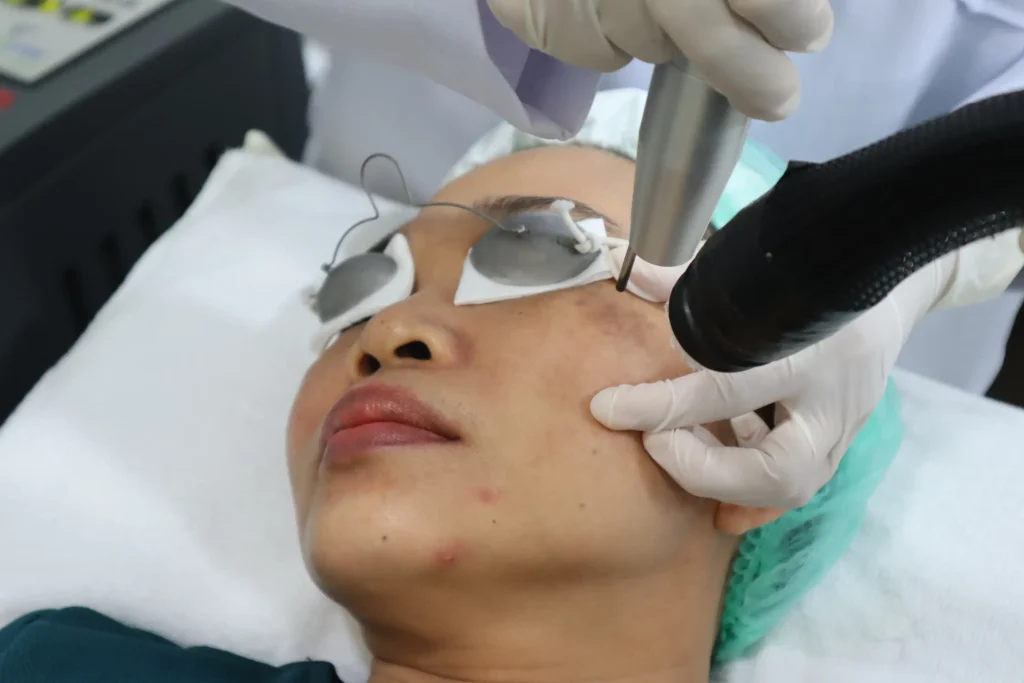
At La Grace Clinic, every melasma plan starts with a doctor’s assessment of your skin type and melasma type. Depending on your needs, options include:
- Melasma Clear Program: A 3-step program that combines Miracle Laser to target pigment, a pigment-correcting serum to help slow new melanin production, and a brightening facial treatment to support skin recovery. It is designed mainly for epidermal and mixed melasma, with deeper melasma assessed individually.
- Whitening Laser: A laser treatment used to help lighten melasma, freckles, and dark spots. Learn more in Whitening Laser Treatment for Melasma & Radiant Skin.
- Meso Brightening: A needle-free brightening treatment that delivers active ingredients into the skin. See Meso Brightening Treatment.
- Other laser options, such as Dual Yellow Laser and Q-Switched Nd:YAG, may be recommended depending on your skin’s needs.
Our current melasma treatment promotion is 999 THB per session, see Melasma Treatment for details.
How Many Sessions Will I Need?
This is a very common question, and the honest answer is that it depends on your melasma type, its depth, and how consistently you protect your skin between sessions.
Melasma treatment is usually planned as a course rather than a single visit. Many people begin to notice a change after the first few sessions, with epidermal melasma typically responding sooner than dermal or mixed melasma. Your doctor will review your progress at each visit and adjust the plan rather than following a fixed number for everyone.
It also helps to think of melasma care in two phases: a treatment phase to lighten existing pigment, followed by a maintenance phase to keep it from returning.
Possible Side Effects
Most side effects of melasma treatments are mild and temporary, but it is important to know what to watch for.
- Redness or a warm sensation for a few hours to a few days after laser or peels
- Dryness, flaking, or mild sensitivity
- Temporary irritation from topical products, especially when starting a new one
Less commonly, the skin may darken after treatment (post-inflammatory hyperpigmentation), particularly in darker skin tones or if the skin is exposed to strong sun soon after a procedure. Overly aggressive laser treatment can also lead to uneven lighter patches in rare cases. This is why gentle settings, careful spacing, and strict sun protection matter.
Contact your clinic promptly if you notice increasing redness, burning, blistering, or rapid darkening after a treatment.
Melasma Treatment Aftercare in Bangkok’s Climate
Aftercare is where results are kept or lost, and in Bangkok’s climate it needs extra attention.
- For the first 48 hours: Wash your face gently with lukewarm water, use a soothing moisturizer, and avoid scrubs, steam, and intense exercise.
- For at least 2 weeks after laser: Avoid strong direct sunlight. If you are planning a beach trip to Phuket or Krabi, schedule it before a laser session rather than right after.
- Every day: Use a broad-spectrum, tinted sunscreen with SPF 50+ and reapply every 2–3 hours outdoors, more often if you are sweating.
- Avoid heat where you can: Skip saunas, steam rooms, and hot yoga during your treatment course.
- Go slowly with active ingredients: Pause retinoids, strong acids, and scrubs at first, then reintroduce them one at a time when your doctor advises.
How to Choose a Melasma Clinic in Bangkok
Bangkok has many aesthetic clinics, and choosing one can feel overwhelming, especially if you are new to the city. These questions can help:
- Does a licensed doctor assess your skin and perform or directly supervise the treatment?
- Are the devices and products registered with the Thai FDA?
- Does the clinic explain your melasma type and give you a personalized plan, rather than a one-size-fits-all package?
- Are the expected results, possible risks, and alternatives explained clearly?
- Is there a follow-up plan and clear aftercare guidance?
- Can you communicate comfortably in your language, and ask questions before and after treatment?
FAQ About Melasma Treatment in Bangkok
A: Melasma is usually described as a condition that can be controlled rather than cured. Treatment can lighten patches considerably, but melasma can return when triggers such as sunlight, heat, or hormonal changes come back. Ongoing sun protection and maintenance care help keep results longer.
A: Most people feel only mild warmth or a light snapping sensation during treatment. Your doctor can adjust the approach if you feel uncomfortable.
A: It depends on how long you are staying. Melasma treatment usually works best as a course of sessions with follow-up, so it is worth discussing your schedule during a consultation. Your doctor can advise whether to start a course, focus on a skincare plan you can continue at home, or plan treatment for a future visit.
A: During pregnancy and breastfeeding, the focus is usually on sun protection and gentle skincare. Many procedures and prescription products are postponed, so always tell your doctor if you are pregnant, planning a pregnancy, or breastfeeding.
A: It can. Melasma is sensitive to sun, heat, and hormones, so returning to the same triggers without protection can bring pigment back. Consistent sunscreen use and occasional maintenance sessions help reduce this.
A: The cost depends on the treatment type and the number of sessions recommended. At La Grace Clinic, our current melasma treatment promotion is 999 THB per session. Your doctor can recommend a plan and explain the costs during a free consultation.
Related Reading
- Whitening Laser Treatment for Melasma & Radiant Skin
- Meso Brightening Treatment
- Melasma Treatment
- Sensitive Skin: Causes & How to Restore Your Skin Barrier
Book a Free Consultation for Melasma Treatment in Bangkok
Not sure whether your pigmentation is melasma, freckles, or sun spots? Book a free consultation with our doctors at any of our 8 branches in Bangkok. We’ll examine your skin, explain your melasma type, and suggest a plan that fits your skin and your schedule.
📲 WhatsApp: +66 90 665 9963
Line: @lagraceclinic
Phone: 087 494 4000 / 087 494 9000